Blog

Your blog category

Basant-Panchami-Saraswati-Puja

Basant Panchami (Saraswati Puja): Celebrating the Arrival of Spring

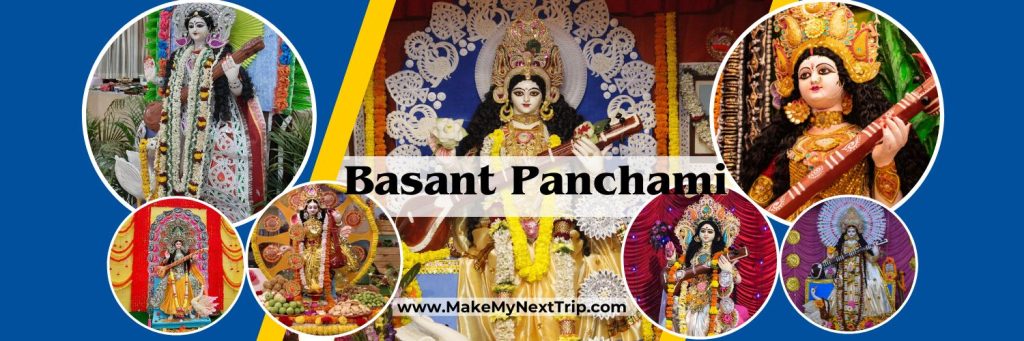
Basant Panchami is a festival that harmoniously combines mythology, spirituality, and cultural customs. According to Vedic texts, Basant Panchami holds significance as an agricultural celebration, signifying the arrival of the spring season (Vasant). During this season, farmers worship Mother Earth in hopes of a plentiful harvest in the future. In addition to the religious rituals and mythological narratives connected to this lively festival, people also participate in cultural pursuits such as kite flying, symbolizing the joyous appreciation of nature’s beauty during the springtime. Significance of Basant Panchami- Basant Panchami signifies the transition from winter to spring, observed on the first day of the spring season. Additionally, it serves as a precursor to the arrangements made for Holi, which takes place forty days following Basant Panchami. Basant Panchami, also known as Vasant Panchami, is a colorful festival observed throughout India. It holds great cultural importance and is closely tied to mythology and age-old Vedic customs. Goddess Saraswati, the Hindu goddess of learning, arts, music, and intelligence, is one of the principal figures linked to this celebration. Devotees honor her on this auspicious day by praying to her and asking for her blessings for success in their artistic and academic activities. Mythological Stories Behind Basant Panchami- As per ancient legends, Goddess Saraswati was brought into existence by Lord Brahma using his divine abilities. She is a symbol of enlightenment and purity. It is thought that she came down from heaven to bless people on the day of Basant Panchami. Another captivating myth associated with Basant Panchami revolves around Kamadeva, the God of Love, and his wife Rati. According to ancient scriptures like the Rigveda and Puranas, Kamadeva’s love arrows disrupted Lord Shiva’s deep meditation, causing him to be turned to ashes by his fiery third eye. On Basant Panchami, Kamadeva was brought back to life by Lord Shiva due to Rati’s unshakable devotion to her husband. This story represents the rebirth of love following a time of grief or separation. Because of this, a lot of people view Basant Panchami as a lucky time to propose marriage or express genuine feelings. Saraswati Puja Rituals- Devotees celebrate this occasion by performing the ritualistic worship of Goddess Saraswati between sunrise and midday, known as Purvahna Kala, according to Hindu customs. Because white is the favorite color of Goddess Saraswati, devotees adore her with white clothing and flowers. As a part of the religious offering, Prasad (Bhog) is prepared using white sesame seeds, and milk sweets are presented to her, later to be shared among the deities. In the northern part of India, Basanti or yellow color is viewed as a symbol of purity, piety, and favorability for prosperity, light, energy, and positivity. Hence, individuals offer yellow flowers to the goddess, especially mustard or marigold flowers, which signify the arrival of spring. Similarly, the offerings made to the goddess include yellow edibles such as Besan and Motichoor Laddoo, Meethe Chawal, Kesaria Kheer, Rajbhog, and Khichdi. Although many fruits are offered to her as well, Ber or Jujube is thought to be her favorite. Saraswati Vandana- या कुन्देन्दु तुषार हारधवला, या शुभ्र वस्त्रावृता, या वीणावर दण्ड मण्डित करा, या श्वेत पद्मासना। या ब्रह्माच्युत शंकर प्रभृतिभिर् देवै सदा वन्दिता, सा मां पातु सरस्वती भगवती निःशेष जाड्यापहा॥ शुक्लां ब्रह्मविचार सार परमां आद्यां जगद्व्यापिनीं, वीणा-पुस्तक-धारिणीम् अभयदां जाड्यान्धकारापहाम्। हस्ते स्फटिक मालिकां विदधतीं पद्मासने संस्थिताम्, वन्दे तां परमेश्वरीं भगवतीं बुद्धिप्रदां शारदाम्॥

Basant Panchami (Saraswati Puja): Celebrating the Arrival of Spring Read More »

durga-puja

Durga Puja

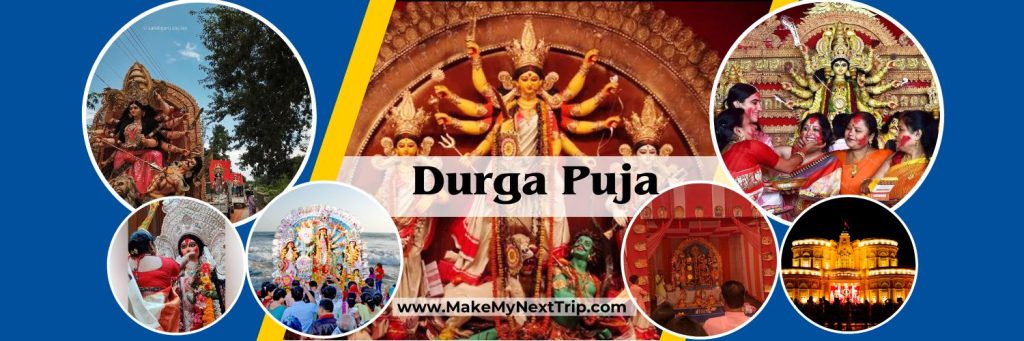
Durga Puja is a significant and widely observed festival in India, especially in the state of West Bengal. It is a Hindu festival that commemorates the triumph of Goddess Durga over the demon Mahishasura. The festival, which honours Goddess Durga’s triumph over evil, is observed as a period of rejuvenation, purification, and spiritual enlightenment. Durga Puja lasts for nine days, also known as Shardiya Navaratri, with the final day being Vijayadashami or Dussehra. Throughout these nine days Extensive and magnificent decorations are created in temporary structures called Pandals, which are dedicated to the Goddess Durga. These Pandals feature intricately designed idols of Goddess Durga and her offspring – Saraswati, Lakshmi, Kartikeya, and Ganesh. Prayers and ceremonies are offered in front of the idols, who are dressed in colourful apparel and jewellery. The idols of Goddess Durga are submerged in water on the tenth day, which also known as Vijayadashami, to represent her return to her celestial home. The purpose of Durga Puja is to pay homage to and ask for the blessings of Goddess Durga, who stands for protection, strength, and power. History- The origins of Durga Puja can be traced back to ancient India and are rooted in Hindu mythology. Numerous Hindu scriptures, such as the Devi Mahatmya or Durga Saptashati, tell the tale of Durga’s victory over Mahishasura. Hindu mythology states that in order to vanquish the demonic Mahishasura, Lord Brahma, Lord Vishnu, and Lord Shiva created the goddess Durga. According to mythology, Mahishasura a demon, who unleashed havoc upon the heavens and the earth by changing into different forms. Durga, who is portrayed as having many arms and weapons, fought Mahishasura fiercely and eventually conquered him after a prolonged battle. This triumph is honored during Durga Puja, symbolizing the victory of good over evil. How to Celebrate Durga Puja- The celebration of Durga Puja has deep roots in Hindu mythology and customs. It is a grand and enthusiastic celebration. Usually, Durga Puja spans over ten days, with the main festivities taking place during the final five days. Extensive decorations, processions, cultural events, and religious rites serve as markers for the celebrations. The main features of the event are as follows: Installation of the Idol: Skilled craftsmen craft clay idols representing Goddess Durga, her four offspring (Lakshmi, Saraswati, Ganesha, and Kartikeya), and the demon Mahishasura. These idols are adorned with beautiful decorations and installed in temporary structures called “Pandals.” Pandal Decorations: The pandals are often adorned with intricate designs, captivating artwork, and vibrant lighting. Communities often compete to create the most visually beautiful pandals. Worship and Rituals: Mantras are chanted, flowers, incense, and other offerings are offered, and conch shells are blown as part of the rituals that priests and followers carry out. These rituals are performed daily throughout the festival. Cultural Programs: Durga Puja is also a time for cultural activities, including music, dance, drama, and art exhibitions. During this time, a lot of communities host shows and competitions. Visiting Pandals: People go to different Pandals to look at the decorations and idols. It’s an occasion to mingle, catch up with loved ones, and savour traditional food. Sindoor Khela: Married ladies apply sindoor (vermilion) to the goddess and to one another on the last day, signifying their husbands’ long lives and their marital pleasure. Immersion (Visarjan): On the final day, the idols are joyously paraded to a nearby river or water body for immersion, along with lively music, dance, and enthusiastic crowds. This act signifies the departure of the goddess to her heavenly dwelling. Significance of Durga Puja- The cultural and religious importance of Durga Puja is paramount. It is a time for families and communities to come together, put on new attire, indulge in delectable cuisine, and relish cultural performances such as music, dance, and theater.   View this post on Instagram   A post shared by Make My Next Trip (@makemynexttrip) Religious Significance: Durga Puja holds a profound religious significance as it provides an opportunity to seek the blessings of Goddess Durga for strength, wisdom, and protection. The festival serves as a reminder of the triumph of good over evil. Cultural Significance: Durga Puja holds immense cultural importance, especially in West Bengal, where it is celebrated with great enthusiasm. It serves as a platform for promoting Bengali art, music, and literature, while fostering a sense of community and unity. Social Significance: The event fosters social cohesion, encourages artistic expression, and brings people together. Economic Significance: The celebration of Durga Puja holds great economic significance since it creates job possibilities for artisans, craftspeople, and festival organisers. Durga Puja goes beyond mere worship; it embodies the spirit of unity, inclusiveness, and joy. It serves as a time for communities to collaborate in creating stunning decorations, extravagant processions, and captivating cultural events. The festival showcases the diversity and richness of Indian culture and holds a special place in the hearts and minds of millions.

Durga Puja Read More »

Navratri-Durga-Puja

“Shardiya Navratri” takes its name from the term “Sharad,” which refers to the autumn season, and “Navratri,” which means “nine nights.” This festival, which lasts for nine days, is dedicated to the worship of the nine forms of the mother goddess Durga, known as Shakti. It is a celebration of the love and devotion towards Maa Durga and her nine different avatars. Pratipada is the primary day of Shardiya Navratri, and Maha Navami is the final day. Hindus observe this festival as a way to honor and worship Maa Durga, who represents the divine feminine energy and signifies the triumph of good over evil. During Navratri, all nine days are dedicated to the worship of the nine forms of Goddess Shakti. Each of these avatars represents a unique characteristic of Goddess Durga. Devotees offer specific Prasad to Navdurga each day to seek her blessings. The Navratri festival concludes on the tenth day with Dussehra or Vijaya Dashami. During the nine-day Navratri festival, devotees worship the nine avatars of Maa Durga to seek their blessings. It is believed that those who worship Goddess Durga with sincerity and devotion during these nine days will be bestowed with peace, happiness, and prosperity as the goddess removes all of their worries. Each day of Navratri is associated with a specific avatar of the goddess. In order to obtain Goddess Durga’s blessings, people practice traditional fasts for the full nine days. During this time, they also clean their homes, wear new clothes, recite shlokas dedicated to each goddess, and offer Prasad or bhog. They offer prayers to the goddess in hopes of receiving her graces for a successful, contented life. Furthermore, on the tenth day known as Vijayadashami, an impressive procession takes place. Clay statues of Maa Durga are ceremoniously immersed in a river, sea, or ocean. This custom is particularly popular in West Bengal, Odisha, Assam, and Bihar. The day of Durga Visarjan is regarded as the most significant day of Maa Durga’s worship. During the nine-day festivities, there is a lot of dancing involved, particularly Garba and Dandiya Raas, which are popular in Gujarat. Garba is a traditional dance where participants clap their hands and move rhythmically in a circular pattern. Dandiya Raas involves dancing with sticks called dandiyas, in sync with the music’s beat.   Key aspects of Shardiya Navratri include- Goddess Worship: As part of the worship, devotees offer prayers and perform rituals to pay homage to the nine forms of the goddess. These forms include Shailaputri, Brahmacharini, Chandraghanta, Kushmanda, Skandamata, Katyayani, Kalaratri, Mahagauri, and Siddhidatri. In some traditions, Bhadrakali, Jagadamba, Annapurna, Sarvamangala, Bhairavi, Chandika, Lalita, Bhavani, and Mookambika are worshipped. Fasting: During the nine-day period, many individuals choose to undertake fasting and penance as a part of their observance. This may involve abstaining from certain foods, following specific dietary restrictions, or engaging in other forms of penance. The purpose behind this practice is to cleanse and purify both the body and soul. Some people strictly adhere to a diet that includes fruits, milk products, nuts, and specific grains such as buckwheat or amaranth. During Navratri, some people also choose to fast exclusively on water or fruit juice for one or two days. Garba and Dandiya Raas: A significant aspect of Navratri celebrations, particularly in Gujarat and other regions, is the participation in Garba and Dandiya Raas dances. These are traditional folk dances where people dress in vibrant attire and engage in rhythmic movements, often incorporating the use of sticks. Temples and Pandals: Temples are adorned beautifully during Navratri, and temporary structures known as pandals are constructed to house the goddess idols. These locations are visited by devotees who come to offer prayers and seek the goddess’ blessings. Music and Cultural Events: Navratri is not only about religious rituals but also encompasses cultural programs, music, and other forms of entertainment that contribute to the festive ambiance. Culmination with Dussehra: The festival reaches its pinnacle with Dussehra, also called Vijayadashami, which commemorates Lord Rama’s victory over the demon king Ravana. In grand public events, effigies of Ravana, Meghnad, and Kumbhakarna are set ablaze to signify the triumph of good over evil. Shardiya Navratri is a period that encourages spiritual introspection, cultural festivities, and the unity of communities within India and among Hindus globally. While the specific customs and traditions may differ across regions, the fundamental essence of honoring the goddess and rejoicing in the victory of righteousness prevails consistently.   There are two mythological stories related to it in the scriptures- According to the first one, Lord Brahma grants a boon of immortality to Mahishasura due to the demon’s unwavering devotion. However, this boon comes with a condition – only a woman would have the power to defeat him. Mahishasura begins to terrorize the Earth since he doesn’t think any woman could ever overcome him, and even the gods are powerless against him. In response, Lord Brahma, Lord Vishnu, and Lord Shiva combine their energies to create the Goddess Durga, who is bestowed with various weapons. The battle between Maa Durga and Mahishasura spans ten days. Eventually, when Mahishasura transforms into a buffalo, Goddess Durga impales him with her ‘Trident,’ instantly ending his life, hence known as Mahishasuramardini. In another legend, Lord Ram spent nine days worshipping Goddess Durga before his battle with Ravana in order to rescue Mother Sita from Lanka. Goddess Durga gave him a blessing of victory, pleased with his commitment. Ten days later, Lord Ram defeated Ravana and took control of Lanka. This day is celebrated as Dussehra, also known as Vijayadashami.

Read More »

Lalbaugcha-Raja

Lalbaugcha Raja Sarvajanik Ganeshotsav Mandal

Lalbaugcha Raja, established in 1934, is an iconic Ganpati Pandal in Mumbai. Starting off as a small endeavor, it has grown into a symbol of unity with great historical importance. During the Ganesh Chaturthi festival, it attracts an astonishing 1.5 million visitors per day and features a huge idol that is believed to grant devotees’ wishes. The pandal’s magnificence, elaborate decorations, and tales of wishes coming true make it a destination that shouldn’t be missed. History of Lalbaughcha Raja-   In the year 1930, there was an open market at Lalbaugh, close to Peru Chawl, where Mumbai’s fishermen would gather to sell their catch. However, the British authorities closed down the chawl in 1932, leaving the fishermen without a place to sell their fish in the open. Struggling with the loss of their business, the fishermen turned to Lord Ganesha, making a vow to find a new open space to continue selling their fish. Their prayers were eventually answered when local councilors, along with the cooperation of the community, managed to secure a plot of land from landlord Rajabai Tayyabali for the construction of a new market. As a way of expressing their gratitude to Lord Ganesha, the fishermen who were relieved to have a new market constructed, decided to celebrate Ganeshotsav in a grand manner in 1934. The result of this was the establishment of Lalbaughcha Raja, which earned the title of ‘Navsala Paavnara Ganapati’ (meaning ‘wish fulfilling Ganapati’). Ever since then, Lalbaugcha Raja has been celebrated annually, with people from different parts of the world coming to seek blessings and have their wishes fulfilled. Who makes Lalbaugcha Raja Murti?   Since 1935 (more than eight decades), the Kambli family has been entrusted with the task of crafting the idol for Mumbai’s renowned Ganesh pandal, Lalbaugcha Raja. Kambli Arts is the original creator of the Lalbaugcha Raja. Since 1920, they have been producing Ganpati idols. However, it wasn’t until 1935, one year after its establishment, that they started creating the popular idol for the Lalbaugcha Raja Mandal. The late Madhusudan D Kambli was the first sculptor commissioned to create the Lalbaugcha Raja idol in 1935. Over time, his sons and grandsons have taken on the responsibility, of carrying on the family tradition. Following the passing of Madhusudhan in the early 1950s, his two sons Ratnakar and Venkatesh took over the family business and have been overseeing its operations ever since. Ratnakar Madhusudhan Kambli, who now manages Kambli Arts, produces over 200 miniature replicas of Lalbaugcha Raja annually at his workshop in Chinchpokli. These scaled-down idols are only 2 feet tall and sold to private households. Throughout the years, the Kambli family has maintained certain essential aspects of the idol’s design. These include the expressive eyes of Bappa, the facial features, and the human-like body structure of the idol. Venkatesh Kambli was responsible for designing the face of Lalbaugcha Raja, which is faithfully replicated each year. The only aspect that undergoes change is the Lalbaugcha Raja’s chair while the other features remain consistent. Their customer base has expanded over the years, and they now receive orders for idols from people in Switzerland, Australia, Holland, France, and the United States. Why Lalbaughcha Raja is so famous?   Lalbaugcha Raja has been traditionally regarded as a Navsacha Ganpati (a deity who grants all wishes). Therefore, millions of people make their way to Lalbaugcha Raja during the ten-day Ganesh Chaturthi Festival seeking blessings. There are two queues available at Lalbaugcha Raja Mandal. Navsachi Line:- The Navsachi Line is a unique line where devotees can touch the deity’s feet and receive his blessings to have their wishes fulfilled. The waiting period for the Navsachi Line varies greatly and is unpredictable. One should be prepared to wait for at least 10 to 20 hours. Mukh Darshanachi Line:- The line called Mukh Darshanachi Line is specifically for getting a glimpse or darshan of Lalbaugcha Raja from a distance. As the name suggests, visitors are only able to see the deity’s face from a certain distance. The waiting time in this line can reach up to 8 hours or more, particularly on weekends. It is advised to plan your visit accordingly, taking this waiting period into consideration.

Lalbaugcha Raja Sarvajanik Ganeshotsav Mandal Read More »

Ganesh-Chaturthi-Festival-Celebration

Ganesh Chaturthi Festival

Aala re aala Bappa aala!! Ganesh Chaturthi, also called Vinayaka Chaturthi or Ganesh Utsav, is a significant Hindu festival that honors the birth of Lord Ganesha, the deity of wisdom, prosperity, and good luck. It is widely celebrated in India, particularly in Maharashtra. Devotees believe that Lord Ganesha returns to Earth each year to bestow blessings upon them. In Indian tradition, this auspicious day is extremely significant and is honoured with great dedication and zeal. History of Ganesh Chaturthi- Ganesh Chaturthi has a long history that goes back many centuries. It is believed that the Maratha ruler Chhatrapati Shivaji Maharaj started celebrating this festival as a way of promoting culture and unity among his people, who were divided by caste. However, the public celebration of Ganesh Utsav gained greater popularity during India’s struggle for independence, led by Lokmanya Bal Gangadhar Tilak. In the late 19th century, Bal Gangadhar Tilak transformed this religious festival into a public event aimed at unifying people against British rule. Significance of Ganesh Chaturthi- Fasting during Ganesha Chaturthi is associated with material advancement, joy, and wealth. Lord Krishna explained the Ganesha Chaturthi fast (vrat) to Yudhishtra. The Bhavishya Purana and Narasimha Purana both make reference to it. This fast is thought to eliminate obstacles and create favorable conditions for success. It also brings knowledge, wealth, and fulfills desires while minimizing the negative impact of mercury planet. Worshipers of Lord Ganesha are believed to have their wishes fulfilled and be purified of their sins, leading them down the path of enlightenment and understanding. This is the underlying spirit behind the celebration of Ganesh Chaturthi. Reciting the mantra “Om Gam Ganapataye Namaha” is believed to be helpful in fulfilling all desires. Rituals of Ganesh Chaturthi- Ganesh Chaturthi is a ten-day festival that signifies the start of prosperity and happiness. It is celebrated both publicly and privately. Many devotees choose to have eco-friendly Ganesha idols for their homes, following their family traditions and personal commitment. People adorn their homes with flowers and rangoli designs and bring clay idols of Lord Ganesha into their homes. Elaborately decorated Ganesh idols are also placed in puja pandals, homes, offices, and educational institutions on the day of Ganesha Chaturthi. Some families celebrate Ganesh Chaturthi for different durations, such as one and a half days, 3 days, 5 days, 7 days, or the full 10 days, each day being unique and wonderful in its own way. According to tradition, the idol of Lord Ganesha should only be kept in the house for a maximum of 10 days. While it may seem delightful to extend the duration, the intense power and energy accumulated in the idol over this period is overwhelming for humans. The festivities of Ganesh Chaturthi commence several months ahead with the creation of idols of Lord Ganesha. The festival involves four main rituals – Pranapratishtha, Shodashopachara, Uttarpuja, and Visarjan puja. Avahana or Pran Pratishtha- The ritual of Pranapratishtha serves to sanctify the idol of Lord Ganesha. Devotees perform “Deep-Prajwalan” (lighting of lamps) and “Sankalpa” (pledge) followed by recitation of mantras. With the recitation of mantras, Lord Ganesha is respectfully invited, and life is invoked within the idol placed in the pandal, temple, or home. This ritual is performed by a priest who chants a mantra. Shodashopachara- It meaning 16-fold worship involves devoutly offering various items to the lord. After washing Lord Ganesha’s feet, offer the Panchamrit Snan, which includes milk, ghee, honey, curd, and sugar. Fresh flowers, akshata (rice mixed with turmeric), sindoor (vermilion), and Chandan (sandalwood paste) are then presented to the idol. The Ganpati idol is adorned with red flowers, durva grass, and garlands in addition to a tilak made of sandalwood paste. Uttarpuja- It is a practice that takes place during the “visarjan” ritual, which is performed before bidding farewell to Lord Ganesha. This celebration involves presenting flowers to the Lord, reciting mantras, and performing aarti (a ceremonial worship involving light). Then, in that order, the Pushpanjali arpan (flower offering), Niranjan aarti, and Pradakshina rites are carried out. Ganpati Visarjan- Ganpati Visarjan is the last ritual where the Ganesha idol is immersed in water. As the crowd bids farewell to the lord, they chant “Ganapati Bappa Morya, Purchya Varshi Laukariya” (Hail Lord Ganpati, come soon next year). Mantras- वक्रतुण्ड महाकाय, सूर्यकोटि समप्रभ । निर्विघ्नं कुरु मे देव, सर्वकार्येषु सर्वदा ॥ Vakratunda Maha-Kaaya Surya-Kotti Samaprabha Nirvighnam Kuru Me Deva Sarva-Kaaryeshu Sarvada   ॐ एकदंताय विद्महे, वक्रतुण्डाय धीमहि, तन्नो दंती प्रचोदयात् | Om Ekadantaya Viddhamahe, Vakratundaya Dhimahi, Tanno Danti Prachodaya   ॐ नमो सिद्धि विनायकाय सर्व कार्य कर्त्रे सर्व विघ्न प्रशमनाय सर्व राज्य वश्यकरणाय सर्वजन सर्वस्त्रीपुरुष आकर्षणाय श्रीं ॐ स्वाहा Om Namo Siddhi Vinayakaya Sarva kaarya kartrey Sarva vighna prashamnay Sarvarjaya Vashyakarnaya Sarvajan Sarvastree Purush Aakarshanaya Shreeng Om Swaha. Home, Office, Pandal Decoration for Ganesh Chaturthi- There are numerous options for decorating your home, office, or pandal for Ganesh Chaturthi. You can get creative by using flowers, balloons, drapes, diyas, candles, lights, rangoli, or a combination of these, as well as many other do-it-yourself ideas. The key to Ganesh Chaturthi decoration is to let your creativity flow. Instead of relying on pre-made decorations available in the market, adding your own creative touch can make a significant difference. Whether it’s using flowers, lights, drapes, chandeliers, or designing your temple or mandap, your decorations are bound to catch everyone’s attention and leave a lasting impression. Ganesha Chaturthi Decoration with Flower- There are countless options for decorating houses and pandals with fresh flowers. You have the freedom to mix and match various types of flowers to create a distinctive floral arrangement in your home. There is a wide range of flowers such as roses, marigolds, orchids, mogra, hydrangea, daisies, and many more for Ganpati decoration. All of these flowers will brighten the house and make Lord Ganesh feel welcome. To liven up your home, you might create various patterns, designs, and floral arrangements. Ganesha Chaturthi Decoration with Drapes- This Ganpati decoration concept for your home should be environmentally friendly. Instead of buying new

Ganesh Chaturthi Festival Read More »

Dahi-handi-festival-celebration-krishna-janmashtami

Dahi Handi Festival

Understanding the Cultural Significance of the Dahi Handi Festival Dahi Handi festival holds enormous cultural significance and is an essential part of Krishna Janmashtami celebrations. Indians across the country, particularly in Maharashtra, celebrate this vibrant and joyful festival with great enthusiasm. The celebration of Dahi Handi commemorates Lord Krishna’s childhood mischief of stealing butter (Makkhan) from earthen pots (handis) that were hung high above the ground. During the festival, people form human pyramids and try to reach and break these curd or buttermilk handis. The cultural significance of Dahi Handi extends beyond its playful nature. It represents unity, teamwork, and the breaking of obstacles to reach a shared objective. The human pyramids formed during the festival symbolize the collective efforts of individuals joining as a community to overcome challenges. Aside from showcasing India’s religious and cultural heritage, this festival also serves as a reminder of Lord Krishna’s teachings on love, unity, and devotion. Participants from different backgrounds enthusiastically come together to celebrate, fostering a sense of camaraderie as they work towards a common goal.   The Mythological Origins and Story Behind Dahi Handi Festival According to mythology, Lord Krishna was notorious for his mischievous behavior during his childhood. One of his favorite activities was to steal butter and curd. The Gopis, in an effort to stop him from reaching these pots, would hang them out of his reach, creating a challenge for young Krishna. During the Dahi Handi festival, the tradition of breaking the earthen pot (matki) symbolizes Lord Krishna’s playful attempts to steal butter. The matki is filled with buttermilk or curd and is suspended at a considerable height. The matki is hung at a significant height and filled with buttermilk or curd. To reach and break the matki, groups of eager people known as “Govinda” constructed human pyramids.   Rituals and Traditions of the Dahi Handi Festival: Breaking Pots and Building Human Pyramids The Dahi Handi festival is an exuberant and joyful celebration that incorporates various customs and practices. The breaking of pots and building of human pyramids is one of the festival’s most thrilling events. During this festival, participants engage in an exciting competition to break a pot hung at a significant height that is filled with curd or butter. This ritual represents Lord Krishna’s fondness for dairy products and his playful nature as a child. The formation of human pyramids is an essential part of this tradition. Teams composed of motivated individuals, known as Govindas, put their shoulders on each other’s shoulders and form towering structures. The goal is to reach the hanging pot and break it while maintaining balance and coordination. It is worth noting that there are specific regulations in place to ensure safety during these competitions. Event organizers impose rules such as setting a maximum height for the pyramids, providing safety gear like helmets and padding, and ensuring participants undergo proper training. The Dahi Handi celebration not only displays physical prowess but also encourages teamwork, determination, and solidarity among participants. It unites people from various backgrounds in a sense of togetherness to commemorate this long-standing tradition.   Different Variations of Dahi Handi Celebrations Across India: From Mumbai to Mathura Dahi Handi is a well-known Hindu festival that is observed all over India and has distinctive local variations. Mumbai and Mathura offer two notable examples, each with their own unique charm and customs. In Mumbai, the Dahi Handi celebration is renowned for its magnificence and exuberance. The teams of young men participating in Dahi Handi celebrations draw inspiration from the playfulness of Lord Krishna. Their goal is to form human pyramids to reach and break a pot filled with curd that is suspended at a considerable height. These pyramids can be impressively tall, sometimes spanning multiple stories. The atmosphere during this event is filled with enthusiasm as onlookers cheer and support the participants. On the contrary, Mathura presents a more conventional and spiritual aspect of Dahi Handi festivities. This city holds great significance as it is believed to be the birthplace of Lord Krishna. In Mathura, devotees congregate at temples to recreate his childhood pranks by forming smaller human pyramids to reach the pot of curd. The focus is on devotion and religious rituals rather than spirited competition. Both Mumbai and Mathura offer their own distinct interpretation of the Dahi Handi festival, reflecting their unique cultural backgrounds and beliefs.   Exciting Festivities Surrounding Dahi Handi: Dance Performances, Music, and Delicious Food The celebration of Dahi Handi is a lively and joyous occasion that involves more than just breaking a pot filled with curd. It is a festive event that includes various festivities, such as dance performances which add excitement to the celebration. Traditional music and songs played during the event create an energetic atmosphere that inspires everyone to be involved in the fun. In addition, Dahi Handi is also known for mouth-watering delicacies. People indulge in a wide variety of sweet and savory foods, such as Ladoos, Kheer, Shrikhand, Panjiri, Puris and Sabzis, as they come together to celebrate. During Dahi Handi celebrations, the combination of lively dance performances, beautiful music, and delicious food creates an atmosphere filled with happiness and unity. This festival brings people together to celebrate and appreciate the strong sense of community while embracing the cultural traditions it represents.

Dahi Handi Festival Read More »

shri-krishna-janam-astami

Shri Krishna Janmashtami

Significance and History of Krishna Janmashtami Krishna Janmashtami, also known as Janam Ashtami, holds great significance in Hindu culture as it honours the birth of Lord Krishna. This auspicious occasion is celebrated with a lot of enthusiasm and devotion by millions of people all over the world. The celebration of Krishna Janmashtami has a long history. On this auspicious day, Devaki and Vasudeva welcomed Lord Krishna into the world, who is regarded as Lord Vishnu’s eighth avatar. His parents were imprisoned by Devaki’s cruel brother, King Kansa, in a prison cell, where he was born at midnight. Krishna Janam Ashtami is a long-standing tradition in which devotees show their devotion to Lord Krishna while rejoicing in his birth anniversary. The celebration of Krishna Janmashtami comprises several rituals and traditions. Followers observe fasts, engage in devotional singing (Bhajans) and dancing (Rass-Leela). Devotees participate in religious processions known as “Dahi Handi” where human pyramids are created to reach and break a pot filled with curd hanging high above the ground. This event depicts the playful nature of young Krishna, who would stealthily enter people’s houses to steal butter.   The Mythological Tales behind Lord Krishna’s Birth The arrival of Lord Krishna into the world was an exciting tale filled with divine intervention and mythical elements. As per ancient scriptures, the birth of Lord Krishna was not a common occurrence. Instead, it was a holy occasion surrounded by extraordinary circumstances. Vasudeva and Devaki, are a devoted couple who were chosen by the gods to bring the incarnation of Lord Vishnu to Earth. Unfortunately, their joy didn’t last long as Devaki’s brother, the wicked king Kansa, had received a prophecy forecasting his eventual downfall at the hands of Devaki’s eighth child. Divine intervention was used to shield their unborn child from Kansa’s wrath. During the night of Lord Krishna’s Birth, as Vasudeva and Devaki were being held captive by Kansa, a series of amazing incidents took place. The prison doors opened by themselves, and the guards fell into a deep sleep while celestial beings watched over the couple. Then, Vasudeva embarked on a difficult journey through dangerous waters to ensure the baby Krishna’s safety. As he crossed the Yamuna River with Baby Krishna in a basket, it is said that divine beings shielded them from heavy rain and thunderstorms using umbrellas. After reaching their destination, Vasudeva exchanged Baby Krishna with Yashoda and Nanda – an ordinary cowherd couple who were unaware of his divine origins. By doing so, Lord Krishna could grow up in Gokul, beyond Kansa’s control. The enchanting mythological stories surrounding Lord Krishna’s birth are not only captivating but also hold deep spiritual meaning. They represent the ultimate victory of righteousness over wickedness and emphasize the influence of divine intervention in shaping one’s fate.   The Rituals and Customs Associated with Krishna Janam Ashtami Millions of Hindus worldwide celebrate Krishna Janmashtami, also known as Janam Ashtami, which is a colourful and cheerful celebration. It commemorates the birth of Lord Krishna, one of the highly respected gods in Hindu mythology. Festivities comprise a range of rituals and traditions that are deeply important to devotees. One of the most well-known traditions linked with Janmashtami is fasting. Devotees fast strictly on this day, refraining from consuming food and water until midnight, which is believed to be the birth time of Lord Krishna. This demonstration of self-restraint signifies devotion and submission to the almighty. The air gets electrified with anticipation and excitement as midnight draws near. Devotees gather at temples or their own residences to joyously celebrate the birth of Lord Krishna. The main event of these celebrations is the “Raas Leela” dance dramas, which recreate Krishna’s early life stories. These performances feature him acting silly as a young child, and they are followed by chants and songs of adoration. Another significant tradition during Janmashtami is the embellishment of swings or cribs with flowers, garments, and ornaments reminiscent of baby Krishna’s cradle. Swinging these cradles while singing devotional hymns praising Lord Krishna is a ritual practiced by devotees. The night continues with an atmosphere of celebration as devotees participate in bhajans (devotional singing) and engage in spiritual discussions that highlight Lord Krishna’s teachings of love, compassion, and righteousness.   Delicious Delights: Traditional Food Prepared During Krishna Janmashtami In addition to the religious practices and festivities, a significant aspect of this auspicious occasion is the preparation and presentation of traditional cuisine to Lord Krishna. Food preparation for Janmashtami is extremely important since it is thought that Lord Krishna’s favorite dish. Devotees from all over the world produce these delicious delights with love and devotion. Kheer- A common dessert at Janmashtami is kheer, a creamy rice pudding cooked in milk and topped with almonds and saffron. It represents richness and bounty, representing the joyful essence of Lord Krishna’s birth. Panjiri- Panjiri is another traditional dessert made for this celebration. Composed of whole wheat flour, ghee (clarified butter), sugar, dry fruits, and aromatic spices such as cardamom and nutmeg, Panjiri is considered an energy-laden offering for Krishna. Makkhan Mishri- During Janmashtami, devotees highly cherish Makkhan Mishri for its unique flavor and texture. This easy yet delightful delicacy consists of fresh homemade butter mixed with powdered sugar or mishri (crystallized sugar). This straightforward but delicious dish is a symbol of Lord Krishna’s devotion to dairy products. Laddu- Laddu, small sweet balls made from various ingredients like flour, semolina (sooji), coconut, or chickpea flour (besan), is another beloved choice for Janmashtami offerings. These bite-sized treats symbolize happiness and good fortune. Shrikhand- It is a smooth dessert prepared with strained yogurt combined with sugar and seasonings like saffron or cardamom powder, is another popular dessert made during this festive period. It is assumed to be one of Lord Krishna’s preferred sweets. For devotees, these offerings are deeply spiritually significant since they represent their love and devotion to Lord Krishna. Through the preparation and presentation of these traditional delicacies, devotees seek blessings and express their gratitude for the divine presence in their

Shri Krishna Janmashtami Read More »

Delhi-Jaipur-Road-Trip

Delhi to Jaipur Road Trip

Jaipur of History The city was primarily founded by Maharaja Jai Singh II in 1727. The name of the city is derived from his name. After the passing of his father, Maharaja Bishan Singh, Maharaja Jai Singh, who was just 11 years old, assumed the throne. After Sawai Jai Singh, the city was governed by a number of Rajput kings. The city remained under the rule of various Rajput rulers after the era of Sawai Jai Singh. These rulers include Sawai Pratap Singh, Sawai Ram Singh II, Madho Singh II, and Sawai Man Singh II, all of whom played a significant role in preserving the city’s heritage. Throughout its history, the city of Jaipur faced repeated attacks from neighboring Marathas. Jaipur, however, remained a Rajput stronghold for most of its existence. Unlike many other parts of the country, Jaipur never came under the control of the British, who eventually left India in 1947. The Pink City Jaipur earned the nickname “Pink City” in 1853 when King Sawai Ram Singh decided to paint all royal and official buildings in a sandstone color. This was done to commemorate the visit of the Prince of Wales to the city. Today, Jaipur is renowned for its remarkable architecture and its vibrant atmosphere, which is beautifully depicted by the color of its buildings. Jaipur Post Independence After India’s independence, Jaipur emerged as the capital city of Rajasthan. Despite the fact that the royal family continues to reside in the City Palace, the state is now fully governed by civil authorities and elected representatives in a democratic manner. Delhi to Jaipur Road Trip Jaipur, also known as the “Pink City,” holds the distinction of being the capital of Rajasthan. From a tourism perspective, it ranks among the most popular destinations in India for both Indian and International visitors. Pink City offers a unique experience of royal treatment, combining ancient palaces, a rich historical heritage, contemporary culture, and traditional practices. This blend of elements makes Jaipur a favorite among travelers. Imagine yourself driving down a loan quiet road, far from the frustrating chaos of traffic, with the cool breeze lightly touching your face as you take in the magnificent views. Of course, you would take a few breaks along the way to grab a refreshment and click some stunning photos for your Facebook and Instagram posts! Are you interested in making this daydream a reality? Well, all you need is a good old road trip! The highway conditions are exceptional at most places, and there are plenty of restaurants and petrol stations along the route. During this 5 to 6-hour journey, You can stop at several tourist locations to explore various attractions, including beautiful villages, ancient palaces, magnificent forts, and tranquil picnic spots. Additionally, there are quaint eateries and even hotels to break up your journey. A road trip from Delhi to Jaipur presents an opportunity to appreciate all the stunning views along the way and have an unforgettable experience Places to visit in Jaipur- 1135AD Abhaneri Stepwell Akshardham Temple Albert Hall Museum Amar Jawan Jyoti Amer Fort Amrapali Museum Anokhi Museum of Hand Painting Bagaru Village Block Painting Bapu Bazar Bhandarej Bhuteshwar Nath Mahadev Birla Temple Central Park Chand Baori Choki Dhani City Palace Digamber Jain Mandir Diwan-e-Aam Diwan-e-Khas Dolls Museum Elefantastic Fun City Galtaji or Galta Monkey Temple Ganesh Pol Gateway Garh Ganesh Temple Gatore Ki Chhatriyan Govind Dev ji Temple Hari Mahal Palace Hathni Kund Haunted Bhangarh Fort Hawa Mahal Jagat Shiromani ji Temple Jaigarh Fort Jaivana Jal Mahal Jantar Mantar Jawahar Circle Jawahar Kala Kendra Jewels Lake Palace Jhalana Leopard Safari Johari Bazar Kale Hanuman ji Ka Mandir Kanak Vrindavan Garden Khole Ke Hanuman ji Temple Maharak Sawai Man Singh II Museum Man Sagar Lake Masala Chowk Moti Dungri Temple Nahargarh Fort Narain Niwas Palace Padao Restaurant Panna Meena Kund Patrika Gate Peacock Restaurant Raj Mandir Cinema Rajmahal Palace Ram Niwas Garden Rambagh Palace Rusirani Villag Sambhar Lake Sargasuli Tower Shahpura Haveli Sheesh Mahal Shila Devi Temple Sisodia Rani Garden Tripolia Bazar Wax Museum World Trade Park Zoo Best Time to Visit Jaipur November to February is the most pleasant time to travel from Delhi to Jaipur Route 1: Distance from Delhi to Jaipur via NH 48 (260 km) Delhi – Gurgaon – Manesar – Bhiwadi – Neemrana – Kotputli – Shahpura – Jaipur Route 2: Distance from Delhi to Jaipur Via NH 48 & NH 248A Delhi – Gurgaon – Bhiwadi – Alwar – Jaipur (325 km) Route 3: Distance from Delhi to Jaipur Via NH 48 Delhi – Faridabad – Manesar – Bhiwadi – Neemrana – Kotputli – Shahpura – Jaipur (300 km) Costing By Car – 15000 (4 people) By Bike- 9000 (2 people) Note- It includes fuel, food, and hotel/guesthouse. These costings are approx and might be change from time to time. Best Place to Eat on The way Fauji Da Dhaba, Raj Riffle Camp – Gurgaon Hotel Highway King – Neemrana Vrindavan Restauran – Amer Where to stay in Jaipur Affordable budget hotels and guest houses The Lodge B & B Jaisal Castle Homestay All Seasons Homestay Vinayak Guest House Rawla Rawatsar Gypsy Monkey Jasoda Heritage Hotel Hotel Kalyan Blue King Hotel Rangoli Atithi Guest House Hotel Pearl Palace Backpackers Villa Hotel Classic Inn Tara Niwas Hotel Galaxy Inn Jaipur Inn Homestay Nahar Singh Haveli Click Collection Jaipur Pandya Niwas Hotel Shalimar Hotel Dharohar Palace aa

Delhi to Jaipur Road Trip Read More »

jim-corbett-national-park

Jim Corbett National Park

History of Jim Corbett National Park- The very first national park in India, Jim Corbett National Park, was established in 1936 under the name of Hailey National Park. Initially, it was owned by the Tehri Garhwal princely state, but the Raja of Tehri handed over a portion of the region to the East India Company in exchange for their assistance in removing the Gurkhas. In the mid-1950s, the park was renamed as Ramganga National Park. However, it was renamed once again in 1955-56 as Jim Corbett National Park, in honor of a renowned British sportsman and writer named Jim Corbett. About Jim Corbett Nation Park Situated near the popular hill station of Nainital, Jim Corbett National Park is a stunning park situated at the foothills of the Himalayas. It is renowned for its large population of tigers, which is the highest among all Indian national parks. At present, the total area of the park is 1,318.54 square kilometers (509.09 sq mi), consisting of a core area spanning 520 square kilometers (200 sq mi) and a buffer area covering 797.72 square kilometers (308.00 sq mi). The core area forms the Jim Corbett National Park, while the buffer area includes reserve forests spanning 496.54 square kilometers (191.72 sq mi) and the Sonanadi Wildlife Sanctuary spanning 301.18 square kilometers (116.29 sq mi). The park was created as part of India’s Project Tiger, which sought to safeguard tigers in the nation’s national parks, primarily the Bengal tiger (Panthera tigris). The park boasts an extensive collection of 488 different plant species. Sal (Shorea), teak, oak, silver fir, spruce, cypress, birch, and bamboo are among the tree species that make up the forest cover. To provide the animals of the park with natural cover, a reed forest was established. Numerous migratory birds can be found in the park. There are at least 600 resident and migratory bird species known, among them, shikras (Levant sparrowhawks), Indian white-backed vultures, black partridges, golden orioles, red jungle fowl, black-crowned night herons, and peafowl are some of the common sightings. The park is home to a diverse range of wildlife, including 25 reptile species like the Indian python and cobras. Additionally, it boasts 7 species of amphibians, which include crocodiles and gharials. In addition to tigers, the Corbett National Park is also inhabited by Leopards. Other mammals that can be found there include the jungle cat, barking deer, spotted deer (chitals), sambar deer, sloth bears, Himalayan black bears, langurs, rhesus macaques, Asiatic black bears, Indian gray mongooses, elephants, wild boars, and nilgai (Indian antelope). The Corbett National Park is divided into different zones that offer visitors the opportunity to enjoy wildlife safaris and engage in various adventurous activities. Exploring the park’s diverse zones guarantees an unforgettable wildlife holiday experience. Each zone provides a lush atmosphere and well-equipped forest lodges for those seeking adventure. Bijrani Zone- Open Period for Safari Tour – 15th October to 30th June Safari Offered -Day Jeep Safari Maximum Number of Jeep Safari – 30 Jeeps in One Shift Forest Rest House – Bijrani FRH, Mailani FRH It is the second-best safari zone to spot tigers after Dhikala zone in the park with rich tiger sightings. It is a popular destination among tourists, appreciated for its scenic beauty and peaceful atmosphere. Bijrani has a diverse landscape with Sal forests and grasslands. The entry to this zone is through Amdanda Gate. Accommodation within the zone includes two Forest Rest Houses – Bijrani (FRH) and Malani (FRH). There are three types of accommodations including single, double, and four-bed rooms. The park offers good quality food served at KMVN canteen. Bijrani Range is divided into core, buffer, and tourism zones. Tourists are permitted to visit only the tourism zone, which begins 5 km from Amdanda Gate. The Forest Rest House (FRH) Bijrani is available for overnight stays in Bijrani Range. Visitors have the option of taking a jeep or elephant safari in Bijrani, but it is recommended to pre-book Safari at the Ramnagar office. Jungle safaris can be enjoyed in the morning or evening, but only in areas outside the core zones. To ensure the wildlife habitat is not disturbed, a limited number of vehicles are allowed on specific paths. In the Bijrani zone, only two safaris are operated per day. Malani sot (stream) offers a picturesque setting and a tranquil ambiance. It is one of the best locations for a peaceful stay and bird watching. Opening and Closing The Bijrani Day Safari zone of Corbett Tiger Reserve remains open for tourists from 15th October to June. And Bijrani Zone remains closed for night halts and Day visits from 1st July 2021 to 14th October 2021. Dhikala Zone- Entry Gate: Dhangari Gate, 32 Km From Ramnagar Open Period for Safari Tour – 15th November to 15th June Safari Offered -Day Canter Safari Only (No Jeep Safari) Maximum Number of Canter Safari Seats – 32 Seats in One Shift Forest Rest House – Dhikala FRH, Gairal FRH, Sarpduli FRH, Sultan FRH The Dhikala Zone is highly regarded and adored among all the tourist zones in the Corbett National Park. It is the most renowned and frequently visited zone. One of the reasons for its popularity is that it is situated deep within the national park and is known for its abundant Royal Bengal Tigers and majestic Asiatic Elephants. Visitors highly desire to explore this zone during the day for safaris and also to spend the night at the Dhikala forest rest house. The Dhikala Zone, the largest zone in the Corbett National Park, boasts a diverse range of plants and animals. The magnificent landscape of this zone includes expansive grasslands called Chaurs, dense forests of Sal trees, and multiple channels of the Ramganga River, providing a captivating view of nature. It is widely regarded as the prime zone for spotting tigers, making it the top choice for wildlife enthusiasts to spend the night. This region is also home to other animals such as wild elephants, Spotted Deer, Wild pigs, Hog Deer,

Jim Corbett National Park Read More »

Scroll to Top