Religious Places

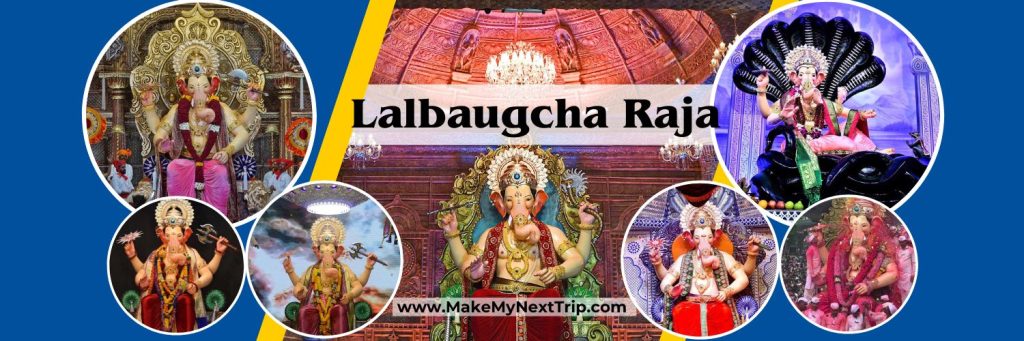
Lalbaugcha-Raja

Lalbaugcha Raja Sarvajanik Ganeshotsav Mandal

Lalbaugcha Raja, established in 1934, is an iconic Ganpati Pandal in Mumbai. Starting off as a small endeavor, it has grown into a symbol of unity with great historical importance. During the Ganesh Chaturthi festival, it attracts an astonishing 1.5 million visitors per day and features a huge idol that is believed to grant devotees’ wishes. The pandal’s magnificence, elaborate decorations, and tales of wishes coming true make it a destination that shouldn’t be missed. History of Lalbaughcha Raja-   In the year 1930, there was an open market at Lalbaugh, close to Peru Chawl, where Mumbai’s fishermen would gather to sell their catch. However, the British authorities closed down the chawl in 1932, leaving the fishermen without a place to sell their fish in the open. Struggling with the loss of their business, the fishermen turned to Lord Ganesha, making a vow to find a new open space to continue selling their fish. Their prayers were eventually answered when local councilors, along with the cooperation of the community, managed to secure a plot of land from landlord Rajabai Tayyabali for the construction of a new market. As a way of expressing their gratitude to Lord Ganesha, the fishermen who were relieved to have a new market constructed, decided to celebrate Ganeshotsav in a grand manner in 1934. The result of this was the establishment of Lalbaughcha Raja, which earned the title of ‘Navsala Paavnara Ganapati’ (meaning ‘wish fulfilling Ganapati’). Ever since then, Lalbaugcha Raja has been celebrated annually, with people from different parts of the world coming to seek blessings and have their wishes fulfilled. Who makes Lalbaugcha Raja Murti?   Since 1935 (more than eight decades), the Kambli family has been entrusted with the task of crafting the idol for Mumbai’s renowned Ganesh pandal, Lalbaugcha Raja. Kambli Arts is the original creator of the Lalbaugcha Raja. Since 1920, they have been producing Ganpati idols. However, it wasn’t until 1935, one year after its establishment, that they started creating the popular idol for the Lalbaugcha Raja Mandal. The late Madhusudan D Kambli was the first sculptor commissioned to create the Lalbaugcha Raja idol in 1935. Over time, his sons and grandsons have taken on the responsibility, of carrying on the family tradition. Following the passing of Madhusudhan in the early 1950s, his two sons Ratnakar and Venkatesh took over the family business and have been overseeing its operations ever since. Ratnakar Madhusudhan Kambli, who now manages Kambli Arts, produces over 200 miniature replicas of Lalbaugcha Raja annually at his workshop in Chinchpokli. These scaled-down idols are only 2 feet tall and sold to private households. Throughout the years, the Kambli family has maintained certain essential aspects of the idol’s design. These include the expressive eyes of Bappa, the facial features, and the human-like body structure of the idol. Venkatesh Kambli was responsible for designing the face of Lalbaugcha Raja, which is faithfully replicated each year. The only aspect that undergoes change is the Lalbaugcha Raja’s chair while the other features remain consistent. Their customer base has expanded over the years, and they now receive orders for idols from people in Switzerland, Australia, Holland, France, and the United States. Why Lalbaughcha Raja is so famous?   Lalbaugcha Raja has been traditionally regarded as a Navsacha Ganpati (a deity who grants all wishes). Therefore, millions of people make their way to Lalbaugcha Raja during the ten-day Ganesh Chaturthi Festival seeking blessings. There are two queues available at Lalbaugcha Raja Mandal. Navsachi Line:- The Navsachi Line is a unique line where devotees can touch the deity’s feet and receive his blessings to have their wishes fulfilled. The waiting period for the Navsachi Line varies greatly and is unpredictable. One should be prepared to wait for at least 10 to 20 hours. Mukh Darshanachi Line:- The line called Mukh Darshanachi Line is specifically for getting a glimpse or darshan of Lalbaugcha Raja from a distance. As the name suggests, visitors are only able to see the deity’s face from a certain distance. The waiting time in this line can reach up to 8 hours or more, particularly on weekends. It is advised to plan your visit accordingly, taking this waiting period into consideration.

Lalbaugcha Raja Sarvajanik Ganeshotsav Mandal Read More »

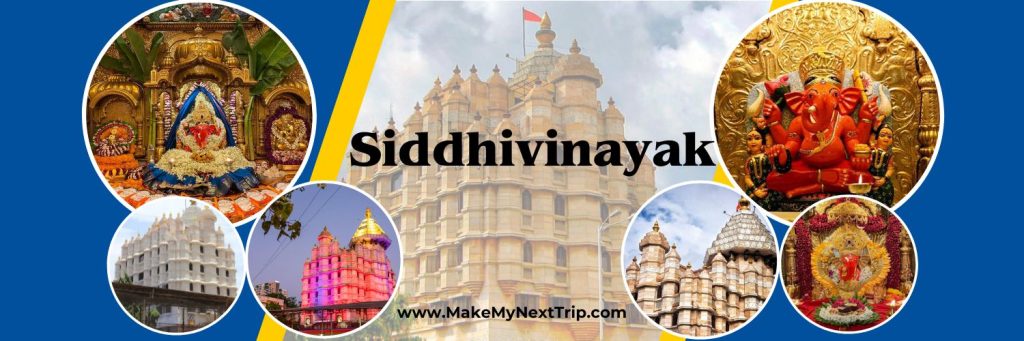
Siddhivinayak-Mumbai

Siddhivinayak Temple

History-   The Siddhivinayak Temple is located in Prabhadevi in Mumbai, Maharashtra. It is a temple dedicated to Lord Ganesha and was initially constructed in 1801. The Siddhivinayak Temple represents devotion to and trust in the Lord. Laxman Vithu Patil and Deubai Patil are the constructors of the original structure of Shri Siddhivinayak Temple. Deubai did not have children and desired to construct a temple in order to receive a child from God. She decided to build a temple dedicated to Lord Ganesha with the hope that He would grant the wishes of other couples who were also struggling to have children. The original structure of the temple was a 3.6m × 3.6m square brick construction with a dome-shaped shikhara. One notable feature of the temple is the tilt of Lord Ganesha’s trunk to the right side. The idol of Lord Ganesha has four hands (Chaturbhuj), each holding a different object: a lotus in the upper right, a miniature axe in the upper left, holy beads in the lower right, and a bowl of Modaks in the lower right. On either side of the deity, the goddesses Riddhi and Siddhi, who symbolize holiness, fulfillment, prosperity, and wealth, are represented. Similar to Lord Shiva’s third eye, there is an eye etched on the forehead of the deity. When a Hanuman idol was discovered during a road extension project in 1952, a small shrine dedicated to Hanuman was added to the temple compound. Over the years, the temple has undergone various transformations, including a massive renovation in 1990, to preserve its sanctity and grandeur   Architecture-   The original Siddhivinayak temple had an ancient architectural style, consisting of a hall, a sanctum sanctorum, some open space, and a water tank. However, in 1990, architect Sharad Athale gave the temple a complete architectural transformation. Although the idol of the deity remained unchanged, everything else about the temple underwent a makeover. The old temple was replaced with a new six-storied structure that featured a unique design. Above the main dome of this new building is a gold-plated Kalash that serves as its crown. Gold is used to cover the Ganesh statue in the center and the inner sanctum. In addition to that, the temple structure is adorned with 37 smaller gilded domes. The shrine was rebuilt using high-quality marble and pink granite. There are three entrances that provide access to the interior of the temple. The wooden doors of the temple feature beautifully carved images of the eight avatars of the main deity. Additionally, the temple includes a small mandap with the idol of Siddhivinayak, and a intricately carved wooden door bearing the image of Ashtavinayak – the eight avatars of Lord Ganesha, including Vakratunda, Ekadant, Mahodara, Gajanana, Lambodara, Vikata, Vighnaraja, and Dumravarna. First Floor- Pujas and darshan are performed mostly on the mezzanine floor. Second Floor- The kitchen and restroom are located on the second level, where Shree’s Maha Naivedya (offering) is prepared. Third Floor- Temple’s central office is situated, which includes a committee member’s chamber, a C.E.O. chamber, a member’s chamber, a conference hall, and a computer room that handles up-to-date administrative and information data processing. Fourth Floor- Features the temple’s library, which houses an extensive collection of 8,000 books on various topics, including religion, literature, medicine, engineering, economics, and more. It is regularly updated with new titles and editions. Fifth Floor – The majority of the food preparation for festivals and fire offerings is done on the fifth floor. Sixth Floor- The summit of the temple on the sixth floor, is a large dome that holds several crowns. Siddhivinayak Mandir Arti Timings-   Wednesday to Monday Kakad Aarti – 5:30 am to 6:00 pm Shree Darshan – 6:00 am to 12:00 pm Naivedhya – 12:05 pm to 12:30 pm Shree Darshan – 12:30 pm to 7:00 pm Evening Dhup Aarti – 7:00 pm to 7:10 pm Shree Darshan – 7:10 pm to 7:20 pm Aarti – 7:30 pm to 8:00 pm Shree Darshan – 8:00 pm to 9:50 pm Shejaarti – 9:50 pm (The last Aarti of the day before bedtime. The temple Gabhara doors remain closed after Shejaarti). The Temple is fully closed till the next morning after Shejaarti Timings on Tuesdays- Shree Darshan – 3:15 am to 4:45 am Kakad Aarti – 5:00 am to 5:30 am Shree Darshan – 5:30 am to 12:00 pm Naivedhya – 12:05 pm to 12:30 pm Shree Darshan – 12:30 pm to 7:00 pm Evening Dhup Aarti – 7:00 pm to 7:10 pm Shree Darshan – 7:10 pm to 8:45 pm Pooja & Aarti – 9:00 pm to 10:10 pm Shree Darshan – 10:10 pm to 11:30 pm Shejaarti – 11:45 pm (The last Aarti of the day before bedtime. The temple Gabhara doors remain closed after Shejaarti) Note- Both Temple Checkpost and Main door are closed For Devotee at 11:30 pm. Temple doors are closed For Ganesh Pooja, Aarti at night 8:45 pm to 10:10 pm by that time Ganesha Darshan will be possible from a far distance. Vinayaki Chaturthi Aarti Timmings- Kakad Aarti – 5:30 am to 6:00 am Shree Darshan – 6:00 am to 7:30 am Abhishekha, Naivedhya and Pooja Aarti – 7:30 am to 1:00 pm Shree Darshan – 1:00 pm to 7:20 pm Aarti – 7:30 pm to 8:00 pm Shree Darshan – 8:00 pm to 9:50 pm Shejaarti – 9:50 pm (The last Aarti of the day before bedtime. The temple Gabhara doors remain closed after Shejaarti) Note- The Devotees are not permitted in the main Temple from 7:30 am to 1:00 pm, when the Maha Abhisheka is performed. During that time flowers and fruits are not allowed. After 1:00 pm darshan will get as per the daily schedule. Sankashti Chaturthi Aarti Timmings Shree Darshan – 4:30 am to 4:45 am Kakad Aarti – 5:00 am to 5:30 am Shree Darshan – 5:30 am to 12:00 pm Naivedhya – 12:05 pm to 12:30 pm Shree Darshan – 12:30 am to 90 minutes Before Moonrise at night

Siddhivinayak Temple Read More »

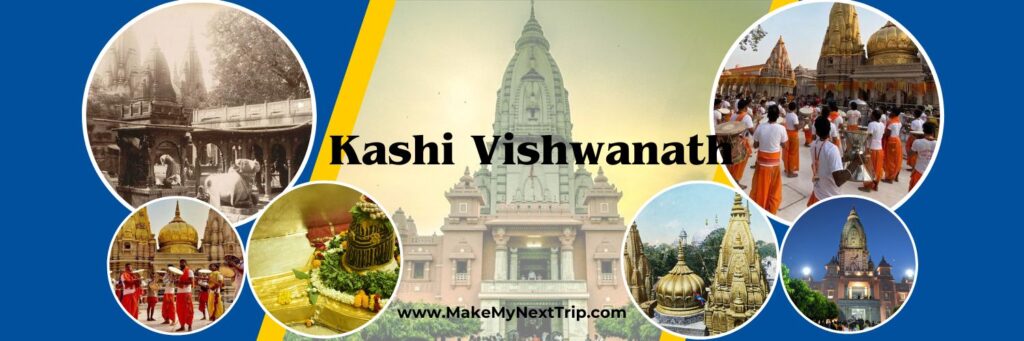
Kashi-Vishwanath-Dham-Temple

Kashi Vishwanath Temple

The story behind the Kashi Vishwanath Temple- The Kashi Vishwanath Temple is one of the most revered Hindu temples in India and is dedicated to Lord Shiva, who has been worshipped here for hundreds of years in the form of Vishwanatha or Vishweshwara, “Ruler of the World.” Vishwanath Temple is considered one of the 12 Jyotirlinga of Lord Shiva, the holiest of holy shrines of Lord Shiva. Devotees say this temple is the dearest to Lord Shiva and believe that Lord Shiva resided here and offered liberation (Moksha) and happiness to all. It is believed that the first Jyotirlinga manifested its supremacy over other gods, broke through the earth’s crust, and flared towards heaven. There is the belief that those who visit the Vishwanath temple after a dip in the holy Ganga get Moksha. It is also believed that devotees achieve freedom from death, and are taken directly to Mount Kailash by messengers of Lord Shiva and not Yama after their death. It is also believed that Shiva himself says the mantra of salvation in the ears of the people who die naturally here. Origin of Kashi Vishwanath Temple- There are many stories about the origin of the temple. One story tells that the temple was built by the Pandava brothers after the Mahabharata war. Another story says that it was built by the sage Vishwamitra after he performed a penance to Lord Shiva. It is said that Lord Shiva himself chose Varanasi as his divine abode, making it a significant pilgrimage site for Shaivite Hindus. According to the Shiva Purana, Brahma and Vishnu disagreed about who is supreme. Lord Shiva transformed into an unending pillar of light and asked them to locate its end. Lord Vishnu acknowledged his defeat while Lord Brahma lied and claimed that he has found the end. As a result, Lord Shiva became angry and cursed Brahma, saying that Hindus would worship Vishnu instead of him because of his honesty. In the meantime, the places where Shiva’s light penetrated through the Earth came to be known as the 12 Jyotirlinga. Who Built and Who Destroyed- The Kashi Vishwanath Temple has been destroyed and rebuilt many times over the centuries. Despite the efforts to preserve and maintain the temple, it faced numerous challenges throughout history. The temple was targeted and destroyed multiple times by foreign invaders, including the Mughals and the British. Over the centuries, each time it was destroyed, it was rebuilt with the devotion and contributions of the Hindu community. Built/Reconstruct Destroyed 9-10 century BCE By Qutubuddin Aibak in 1194 CE By Gujarati merchant in 1230 By Sikandar Lodi in 14th century By Narayan Bhatt in 1584-85 By Aurangzeb in 1669 By Ahilyabai Holkar in 1780 Much later in the year 1839, Maharaja Ranjit Singh of Punjab donated 1000 kg of gold that was used for gold plating the domes of the temple. In recent times, significant efforts have been made to restore the temple to its former glory. The Kashi Vishwanath Corridor, a massive redevelopment project, was initiated in 2019 to enhance the temple premises and provide improved facilities for pilgrims. The corridor aims to connect the temple with the riverfront, allowing devotees easier access to the holy Ganges. Today, the Kashi Vishwanath Temple stands as a symbol of devotion and spiritual significance. It attracts millions of devotees from all over the world who seek the blessings of Lord Shiva and wish to experience the sacredness of Varanasi, a city steeped in history and tradition. Lesser-Known Facts About Kashi Vishwanath Temple- This revered temple was reportedly visited by many renowned saints, including Adi Shankaracharya, Swami Vivekananda, Ramakrishna Paramhansa, Sathya Sai Baba, Swami Dayananda Saraswati and Guru Nanak. The stone statue of Nandi Bull was gifted to the temple by the Rana of Nepal in the 1860s. What is the Aarti Timings at the Temple? Temple Timing: 04 AM – 11 PM. Mangala Aarti Timing: 03:00AM to 04:00AM Bhog/Aarti Timing: 11:15 A.M. to 12:20 PM Saptirishi Aarti Timing: 07:00 PM to 08:15 PM Night Shringar/Bhog Aarti Timing: 09:00 PM to 10:15 PM Shayana Aarti Timing: 10:30 PM to 11:00 PM How to Reach the Kashi Vishwanath Temple? Temple Address: Lahori Tola, Varanasi, Uttar Pradesh 221001 Varanasi is easily accessible from all parts of the country. The city of temples offers convenient and comfortable traveling options to and from other cities of India and is well connected by road, trains and flights. By Road- 4 Km. from Chaudhary Charan Singh Bus Stand, Vijay Nagar Colony, Chetganj, Varanasi (UP). Frequent govt. and private buses and other road transport services from all major cities and towns in India. Private taxis are available from travel agencies, hotels, etc., auto rickshaws, cycle rickshaws are also available. By Train- Varanasi has a number of railway stations. While Varanasi city station lies only 2 Km. away and Varanasi junction is around 6 Km. away from the temple. From the exit gate of the railway station, cycle rickshaws, autos and taxis can be easily hired. By Air- From Lal Bahadur Shastri Airport, the Kashi Vishwanath temple is about 20-25 Km. away. The Lal Bahadur Shastri Airport in Babatpur is well-connected to Indian metros such as Delhi and Mumbai. Interconnecting flights are available from Delhi Airport. So, tourists coming from other Indian cities or abroad can reach the Delhi domestic airport and board a flight bound for Varanasi. Dress Code for the Temple- The dress code will be applicable to devotees at the Kashi Vishwanath Temple. There is a mandatory dress code for visitors to wear an unstitched dhoti and kurta to touch “Shivalinga” inside the temple’s ‘garbha-griha’ (sanctum-sanctorum). Women devotees will be allowed to touch the “Shivalinga” only when they wear the Sari. The devotees wearing pants, shirts, jeans, and suits will only be allowed to have a darshan of Baba (Shivalinga) from the outside. Places to visit near Kashi Vishwanath Temple- Nepali Temple of Lord Shiva (300 m) Dashashwamedh Ghat (500 m) Ganga Aarti (500 m) Manikarnika Ghat (650 m)

Kashi Vishwanath Temple Read More »

Scroll to Top